CFDs are complex instruments and come with a high risk of losing money rapidly due to leverage. 76% of retail investor accounts lose money when trading CFDs with this provider. You should consider whether you understand how CFDs work and whether you can afford to take the high risk of losing your money.
CFDs are complex instruments and come with a high risk of losing money rapidly due to leverage. 76% of retail investor accounts lose money when trading CFDs with this provider. You should consider whether you understand how CFDs work and whether you can afford to take the high risk of losing your money.


What is Forex and How Does the Forex Market Work?
Forex, or the foreign exchange market, is the global marketplace where currencies are traded. It is one of the largest and most liquid financial markets in the world, operating 24 hours a day across major financial centers such as London, New York, Tokyo, and Sydney. Because trading activity moves across these global sessions, many traders also monitor Forex opening times to track periods of higher market activity and liquidity.
In the Forex market, currencies are traded in pairs such as EUR/USD, GBP/USD, and USD/JPY. Traders monitor changes in exchange rates and market conditions to analyze potential price movements between one currency and another.
Most retail Forex trading is conducted through CFDs (Contracts for Difference), which allow traders to speculate on price movements without owning the underlying currency. Because Forex trading often involves leverage, both gains and losses may increase depending on market conditions and leverage used.
Due to the fast-moving nature of the Forex market, many beginner traders start by learning basic market concepts, practicing with demo accounts, and developing risk management strategies before trading with real funds.
| Key Takeaways |
-
Forex is the global foreign exchange market where currencies are traded in pairs such as EUR/USD and USD/JPY.
-
Most retail Forex trading is conducted through CFDs (Contracts for Difference), allowing traders to speculate on currency price movements without owning the underlying asset.
-
Traders may speculate on both rising (Buy) and falling (Sell) market movements depending on their market outlook.
-
Trading results are influenced by factors such as lot size, price movement, leverage, and the number of pips gained or lost.
-
Forex currency pairs are commonly categorized into major, minor, and exotic pairs based on trading volume and market liquidity.
How Does the Forex Market Work?
In most retail Forex trading, traders do not exchange physical currency directly. Instead, trading is commonly conducted through CFDs (Contracts for Difference), which allow traders to speculate on currency price movements without owning the underlying asset. This differs from traditional currency exchange services offered by banks or financial institutions.
Forex trading takes place through currency pairs such as EUR/USD and USD/JPY. In each pair, the first currency is known as the base currency, while the second is the quote currency. The exchange rate shows how much of the quote currency is needed to purchase one unit of the base currency.
Example: If EUR/USD is trading at 1.1500, it means 1 euro is equivalent to 1.1500 US dollars.
How do Forex market movements affect trading results?
-
If a trader expects the euro to strengthen against the US dollar (price will rise), they may choose to open a Buy position on EUR/USD.
-
If a trader expects the euro to weaken relative to the US dollar (price will fall), they may choose to open a Sell position on EUR/USD.
Trading results depend on whether market price movements align with the trader’s market outlook and position direction.
The Forex market includes several categories of currency pairs. Major pairs typically involve the US dollar alongside highly traded currencies such as the euro or Japanese yen, while minor pairs do not include the US dollar but may still experience active trading activity in global markets.
Learn More : Key Terms to Know Before Trading Forex
How Forex Profit and Loss Are Calculated
In Forex trading, gains or losses are generally determined by the difference between the opening price and closing price of a position, along with factors such as lot size and market movement.
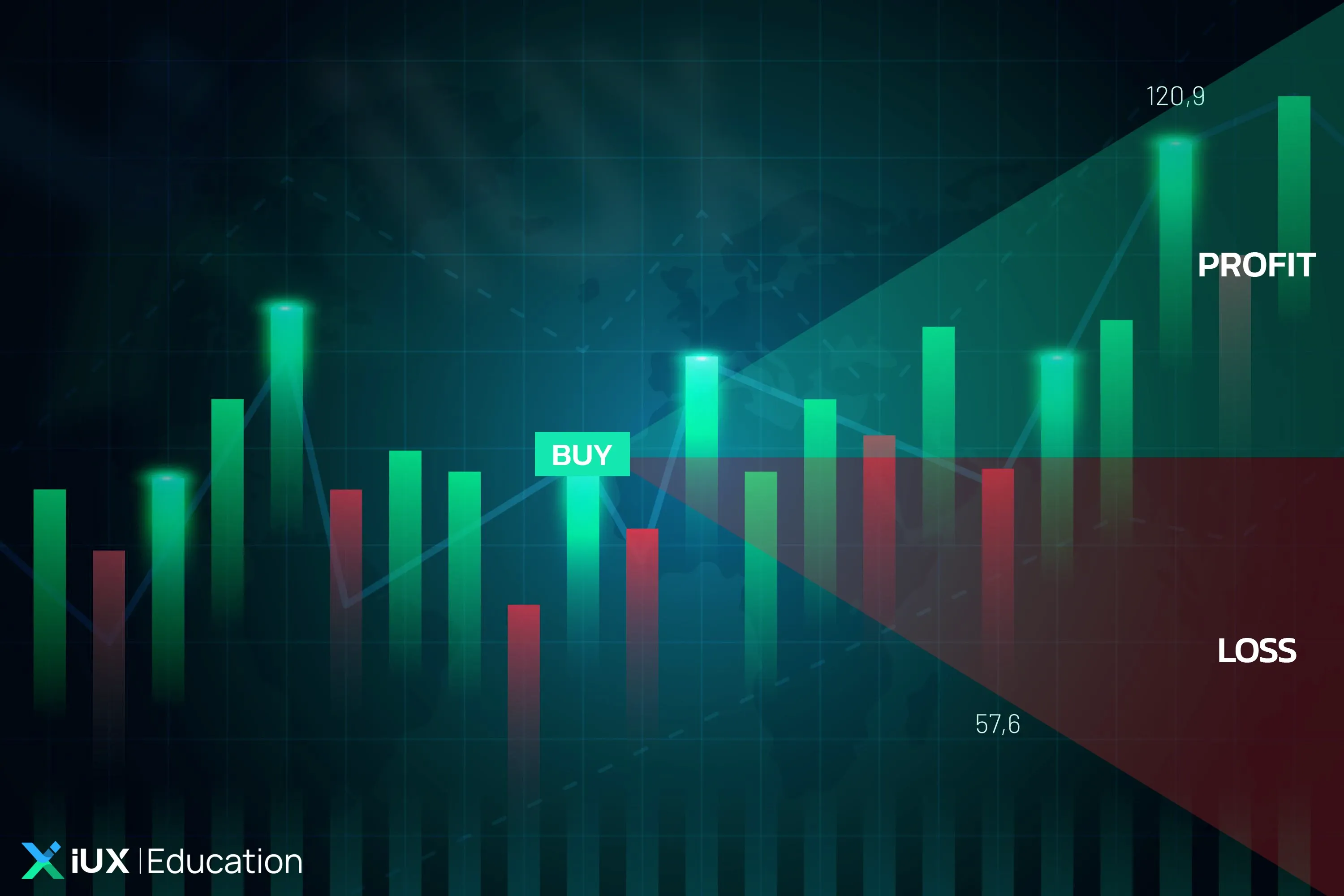
For a Buy position, a gain may occur if the market price moves upward after the trade is opened, while a downward movement may result in a loss.
For a Sell position, a positive result may occur if the market price moves downward, while rising prices may lead to losses depending on the trade size and market conditions.
Example:
-
A trader opens a Buy position on EUR/USD at 1.1000.
-
Later, the exchange rate rises to 1.1050.
-
The difference of 0.0050 represents a movement of 50 pips, with a pip referring to the standard unit of price movement in Forex trading.
-
- If the position size is 1 standard lot, each pip movement is commonly valued at approximately $10 in EUR/USD trading. A 50-pip market movement would therefore represent an estimated $500 gain or loss, depending on the trade direction.
- For a 0.1 lot position, each pip movement is typically valued at approximately $1, meaning a 50-pip movement could represent an estimated $50 gain or loss.
Read more: How to Calculate Lot Size in Forex
 |
Tip: Many beginner traders use demo accounts to understand how pips, leverage, and lot size may affect trading results before participating in live market conditions. |
Forex Trading Features Available on IUX
IUX provides access to Forex trading products and market analysis tools that may support traders in monitoring price movements and managing trading activity.
- Access to Major and Exotic Currency Pairs: Traders can monitor a wide range of currency pairs across different market conditions and volatility profiles.
- Advanced Tools and Charts: Charting features and technical analysis tools are available to help traders review market trends and price activity.
- Risk Management Features: Tools such as stop loss and take profit settings may assist traders in managing market exposure and trading risk.
- Educational Resources: Market education materials and trading guides are available for users who want to learn more about Forex market concepts and analysis methods.
The platform also provides access to pricing information, charting tools, and order execution features commonly used in Forex trading. Factors such as spread conditions, execution speed, and market liquidity may vary depending on market volatility and trading conditions. Customer support and educational resources are also available to assist users with platform-related questions.
Summary of Forex Trading
The Forex market is a global financial market where currencies are traded through currency pairs such as EUR/USD and USD/JPY. Operating across major international trading sessions, the market remains active 24 hours a day during weekdays and is widely monitored by participants around the world.
Most retail Forex trading is conducted through CFDs (Contracts for Difference), allowing traders to speculate on currency price movements without owning the underlying asset. Because leverage is commonly used in Forex trading, both gains and losses may be amplified depending on market conditions and position size.
Due to the fast-moving nature of the Forex market, many traders focus on understanding market fundamentals, practicing with demo accounts, and applying risk management techniques before participating in live trading environments.
Forex trading involves significant risk and may not be suitable for all investors. Individuals should conduct independent research and consider their financial circumstances before making trading decisions.
💡 Frequently Asked Questions about Forex
Q: Can beginners learn Forex trading?
A: Many beginner traders start by learning basic Forex concepts, practicing with demo accounts, and understanding how leverage, lot size, and market volatility may affect trading results. Because Forex trading carries significant risk, risk management and market education are commonly emphasized before participating in live trading.
Q: What factors should traders consider before starting Forex trading?
A: Before participating in Forex trading, traders often consider factors such as account type, leverage, trading costs, and personal risk tolerance. Because leverage can amplify both gains and losses, many traders begin with smaller position sizes and demo trading environments while learning how the market works.
Q: How is Forex trading different from traditional currency exchange?
A: Traditional currency exchange involves converting and holding physical currency through banks or financial institutions. In contrast, most retail Forex trading is conducted through CFDs (Contracts for Difference), where traders speculate on currency price movements without owning the underlying asset.
Note: This article is intended for preliminary educational purposes only and is not intended to provide investment guidance. Investors should conduct further research before making investment decisions.
Source: what is forex? , how to trade currencies?