CFDs are complex instruments and come with a high risk of losing money rapidly due to leverage. 76% of retail investor accounts lose money when trading CFDs with this provider. You should consider whether you understand how CFDs work and whether you can afford to take the high risk of losing your money.
CFDs are complex instruments and come with a high risk of losing money rapidly due to leverage. 76% of retail investor accounts lose money when trading CFDs with this provider. You should consider whether you understand how CFDs work and whether you can afford to take the high risk of losing your money.


What Beginners Need to Know About Forex Trading
Many people have heard of Forex trading, but beginners are often unsure how the market actually works. The Forex market, also known as the Foreign Exchange Market, is one of the world’s largest financial markets, where currencies are traded based on changes in exchange rates.
Unlike traditional currency exchange at a bank, Forex trading through CFDs focuses on speculating on price movements rather than owning physical currencies. Because of this, the market may offer opportunities in both rising and falling conditions. However, Forex trading also involves substantial risk, especially when leverage is used, so it may not be suitable for all investors.
| Key Takeaways |
- Forex trading usually involves speculating on currency price movements rather than holding physical cash.
- CFD (Contracts for Difference) allow traders to access multiple financial markets through one trading platform.
- Traders may profit or incur losses depending on whether the market moves in line with their analysis.
- Position size, leverage, and risk management can significantly influence trading outcomes
- Forex trading involves risk, and losses can exceed expectations if risk controls are not used properly.

What Exactly Is Forex Trading?
Forex trading refers to the buying and selling of currency pairs such as EUR/USD, GBP/USD, or USD/JPY. Traders attempt to anticipate whether one currency will strengthen or weaken relative to another.
For example:
- If a trader believes the euro may strengthen against the U.S. dollar, they may open a Buy position on EUR/USD.
- If they expect the euro may weaken, they may open a Sell position instead.
The difference between the opening price and closing price determines whether the trade results in a profit or a loss.
The Forex market operates 24 hours a day during weekdays due to the overlap of major global financial sessions, including London, New York, Tokyo, and Sydney. This high level of liquidity is one reason why Forex remains widely followed by traders around the world.
Forex Trading vs Currency Exchange
One common misconception is that Forex trading works like exchanging money at a bank before traveling abroad. In reality, the two activities are very different.
Traditional currency exchange usually involves physically receiving another currency for spending or saving purposes. Forex CFD trading, on the other hand, is based on price speculation. Traders generally do not own or withdraw the actual currencies being traded.
Instead, trading results depend on market price fluctuations and the trader’s ability to manage risk appropriately.
What Is a CFD?
A CFD, or Contract for Difference, is a financial derivative that allows traders to speculate on price movements without owning the underlying asset directly. CFDs are commonly used for trading:
- Forex
- Commodities
- Indices
- Stocks
- ETFs
CFDs allow traders to take positions in both upward and downward markets through Buy (Long) or Sell (Short) orders. Some traders also use leverage, which can increase market exposure while requiring less initial capital.
However, leverage can magnify both profits and losses. Because of this, understanding risk management is essential before trading leveraged products.
 |
Tip: Aside from Forex, another highly popular asset traded through CFDs is XAU/USD, which represents the price of gold quoted against the U.S. dollar. |
How to Make a Profit from Forex
Earning profits in the Forex market follows a few basic principles:
- Choose the currency pair you want to trade.
- Predict the direction in which the price will move (up or down).
- Open a Buy order if you expect the price to rise, or a Sell order if you expect the price to fall.
- Once the price moves in your favor, you can close the order and take profit from the price difference.
While the core idea of profiting from Forex may sound simple—just predicting whether the price will rise or fall—the reality is more complex. There are many features, tools, and details that directly affect both profits and losses. These are essential for traders to study carefully and should never be overlooked.
What You Should Learn Next
- Pip : The unit that measures price movement.
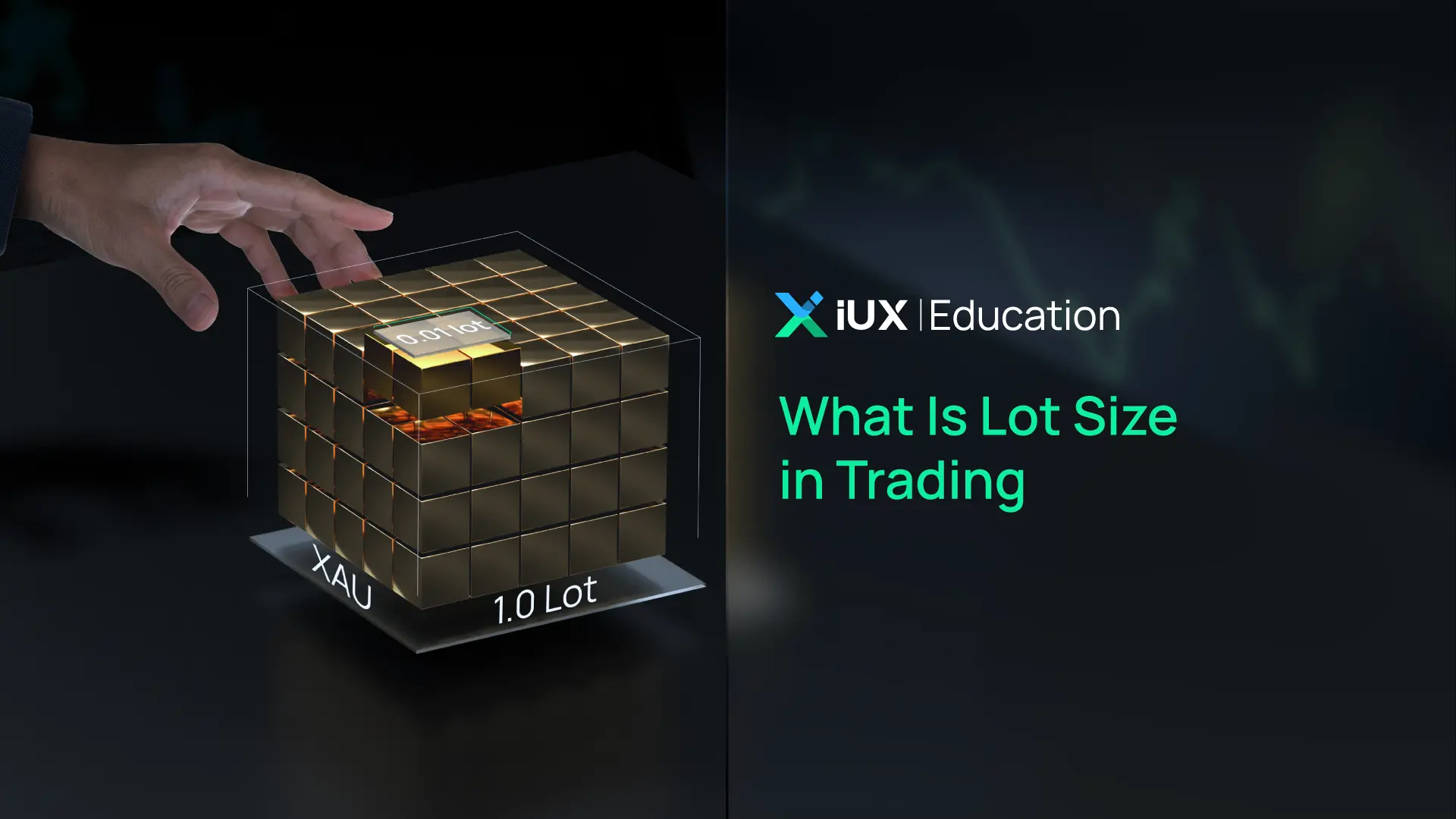
- Lot Size : The trading volume for each order.
- Stop Loss : An automatic order that limits losses when the market moves against your prediction.
- Take Profit : An automatic order that locks in profits once your target price is reached.
- Leverage : Borrowed capital from a broker that allows you to open larger positions, amplifying both potential gains and risks.

Simple Example of Forex Trading
Let’s say you expect the EUR/USD currency pair to rise, and you decide to open a Buy order.
-
Open Order
-
You predict that “the euro will strengthen against the U.S. dollar.”
-
So, you open a Buy position on EUR/USD at 1.1000.
-
-
Price Movement
-
Later, the price moves up to 1.1050.
-
The difference is 0.0050, or 50 pips.
-
-
Close Order
-
You close your position at 1.1050.
-
Profit = Price Difference × Order Size (Lot)
-
-
Profit Calculation
-
If trading 1 Lot → 1 pip ≈ $10 → Profit = 50 pips = $500
-
If trading 0.1 Lot → 1 pip ≈ $1 → Profit = 50 pips = $50
-
If trading 0.01 Lot → 1 pip ≈ $0.10 → Profit = 50 pips = $5
-
As you can see, your profit depends on the lot size and the accuracy of your prediction. If the price rises as expected and you opened a Buy order, you earn a profit. But if the market moves against your prediction, you risk losing your capital.
Always remember that trading carries risk. Careful planning and strong risk management are essential. Beginners should start with a demo account to practice analysis and understand how the market works before investing real money. Once moving to a live account, it’s best to commit only a small portion of your capital, always set a Stop Loss, and avoid letting emotions drive your decisions.
💡 Frequently Asked Questions (FAQ)
Q: How much money do I need to start trading Forex?
A: You don’t need a large amount to begin. Most brokers allow you to open an account with as little as $10–$100, and you can also use leverage to expand your investment opportunities. However, you should only invest what is appropriate for your own financial situation.
Q: How is Forex different from exchanging money at the bank?
A: Exchanging money at the bank means you actually own physical currency. In contrast, Forex trading is mostly done through CFDs (Contracts for Difference), where you speculate on price movements without holding the actual currency.
Q: How should beginners start trading Forex?
A: Start by learning the basics, practicing with a demo account, and developing risk management skills such as setting Stop Loss and Take Profit orders. Once you gain more understanding, you can gradually move on to real money trading with small amounts.
Note: This article is intended for preliminary educational purposes only and is not intended to provide investment guidance. Investors should conduct further research before making investment decisions.